Why don’t women’s clothes ever seem to have proper pockets? It’s a complaint that echoes through changing rooms and sewing rooms alike. But hidden in history lies a surprising truth: for centuries, women had pockets of their own – not sewn into skirts or coats, but tied on as beautiful, functional creations in their own right.
Between 1660 and the late 19th century, most women wore tie-on pockets – cloth bags attached around the waist with ribbons and tucked under skirts, reached through a discreet slit in the side seam. These weren’t just practical containers. They were private, personal spaces in a world where women’s independence was often restricted. Inside, women carried keys, money, sewing kits, letters, food, keepsakes – the essentials and the sentimental alike.
And here’s where craft comes into the story. Many pockets were far more than plain bags. Surviving examples in museum collections show exquisite embroidery, patchwork piecing, and the creative reuse of fabrics. Some were stitched from scraps, making them early examples of upcycling. Others carried delicate needlework that turned an everyday object into a tiny canvas of self-expression. These stitches weren’t for public display, but for the maker’s own joy and use – a hidden, mindful form of creativity.
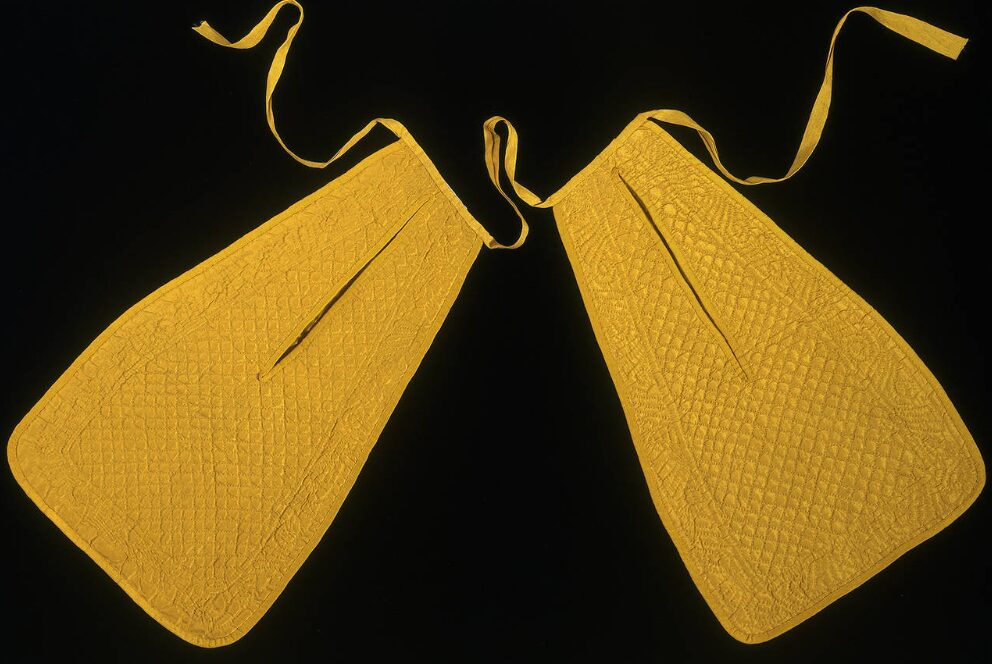
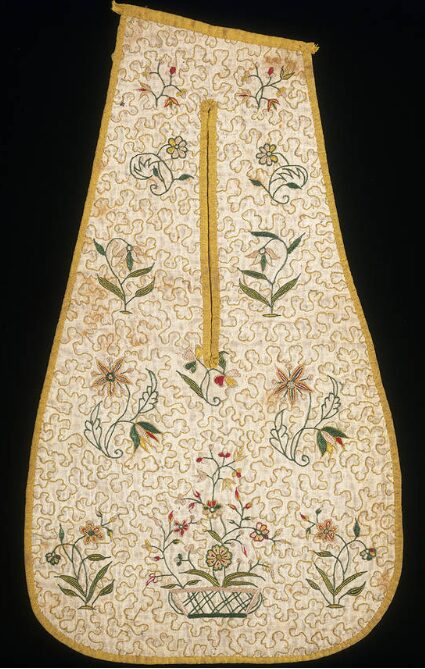
Images © Victoria and Albert Museum, London
Pockets tell us something else too: they hold women’s untold histories. Diaries and letters describe their contents, hinting at the daily rhythm of women’s lives – a secret store of both necessity and comfort, always close at hand. In an age when women often had few spaces of their own, the pocket was both practical and symbolic: a private world stitched from fabric.
✨ Did you know?
The word pocket comes from the Old French poquet, meaning a small bag or pouch. It’s a diminutive of poke (a bag or sack), which is where we also get the phrase “a pig in a poke.” Originally, a “pocket” wasn’t part of clothing at all – it literally meant a little bag. The tie-on pockets women wore in the 17th–19th centuries were exactly that.
Why Women Lost Their Pockets
The story takes a sharper turn in the 19th century. As fashions changed and skirts narrowed, women’s pockets began to vanish. But this wasn’t only about style.
Large, tie-on pockets gave women something rare: a private space of their own. They could carry letters, money, small books, or even political pamphlets – things that offered independence or, in some eyes, threatened the status quo. Social commentators often mocked or worried about the mystery of women’s hidden pockets, suggesting they were places for secrets, contraband, or even revolutionary ideas.
So, as slimline silhouettes rose in popularity, the useful pocket was quietly sidelined. Women were instead given tiny sewn-in pockets or reticules (small handbags), which were impractical and symbolic of dependency. Men, meanwhile, kept their deep, functional pockets. This shift wasn’t just about fashion – it reflected wider attempts to limit women’s freedom, autonomy, and mobility.
But as fashions changed in the 19th century, skirts grew slimmer, and built-in dress pockets (tiny ones at that) began to appear. The freedom of the tie-on pocket declined, leaving women with fewer places to carry their essentials.
So a new accessory emerged – the handbag!
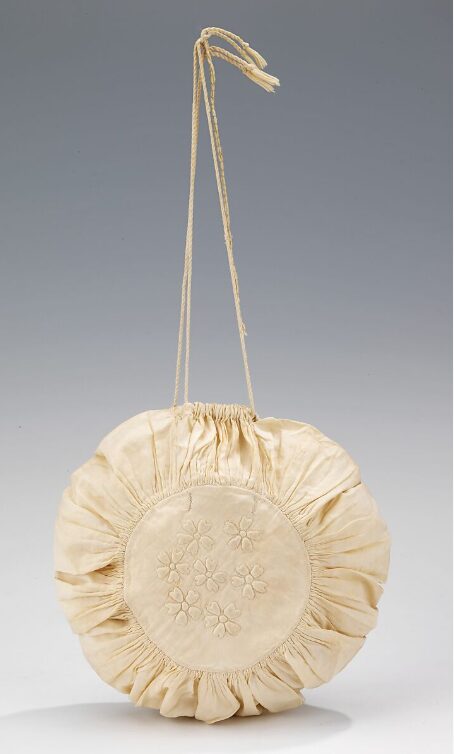
At first, women carried small reticules – delicate, decorative bags that dangled from the wrist. These were fashionable but far less practical than the roomy tie-on pockets they replaced. Where a pocket had once been hidden, secure, and deeply personal, a handbag was visible, fragile, and often symbolic of dependency: it tied women’s ability to carry their belongings to something external, separate from the clothes they wore.
As the 19th century moved into the 20th, handbags became a staple of women’s fashion – growing in size and variety, and eventually evolving into the statement accessory we know today. But their origins trace directly back to the moment women lost their pockets. So why does this history matter now? For one, it reminds us of the resilience and creativity woven into everyday objects. Those pockets show how women reclaimed craft and practicality in a small, empowering way. They also connect beautifully to today’s slow fashion and mindful making movement: reusing scraps, sewing for longevity, and creating items that carry meaning as well as function.
It’s unlikely that the tie-on pocket will make a true comeback – fashion has moved on, and handbags have firmly taken their place. But the idea can still inspire us. Creating your own decorative pouch, sleeve, or bag could put a modern twist on the concept – a way to stitch history into something practical, personal, and stylish for today.
From stitched secrets to modern inspiration, the lost world of women’s pockets is a reminder that craft has always been about more than materials. It’s about identity, resilience, and finding joy in the everyday.