Last weekend we visited Killerton House in Devon to see the extraordinary Red Dress Project on display – an artwork that has been years in the making and speaks far beyond stitch and cloth. It’s one thing to see the detail up close, but once you know the story behind it, the project becomes even more inspiring.
What Is the Red Dress Project?
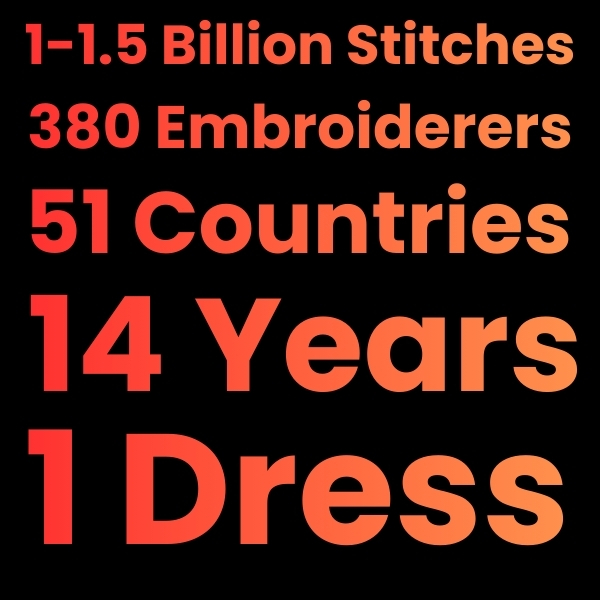
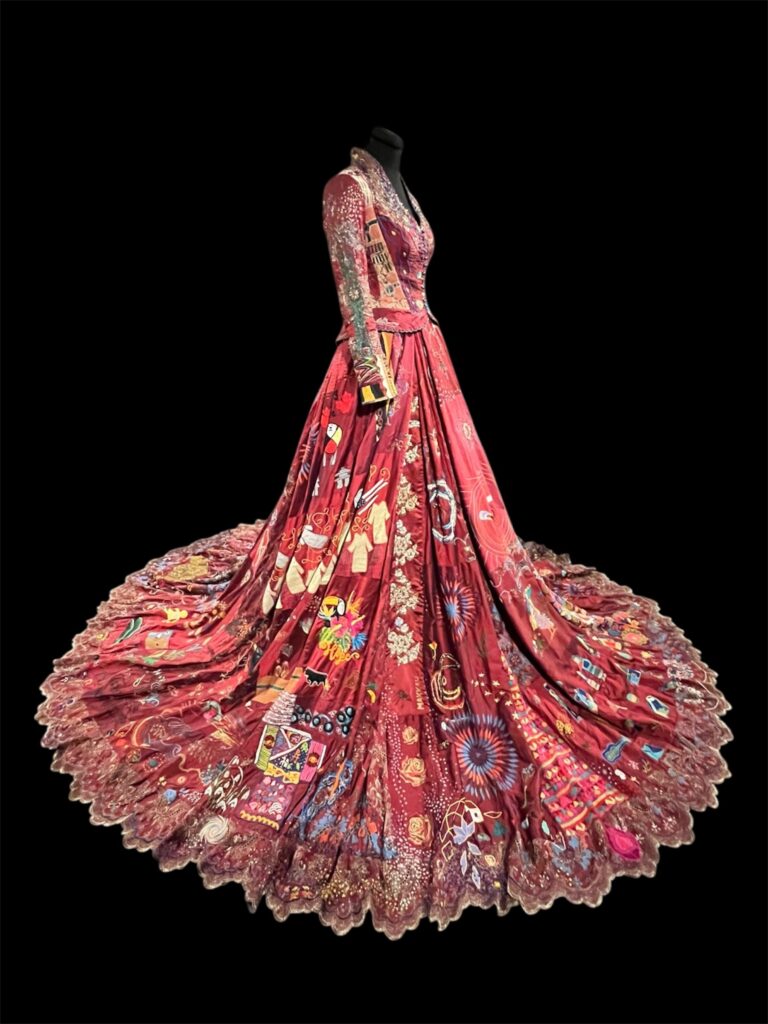
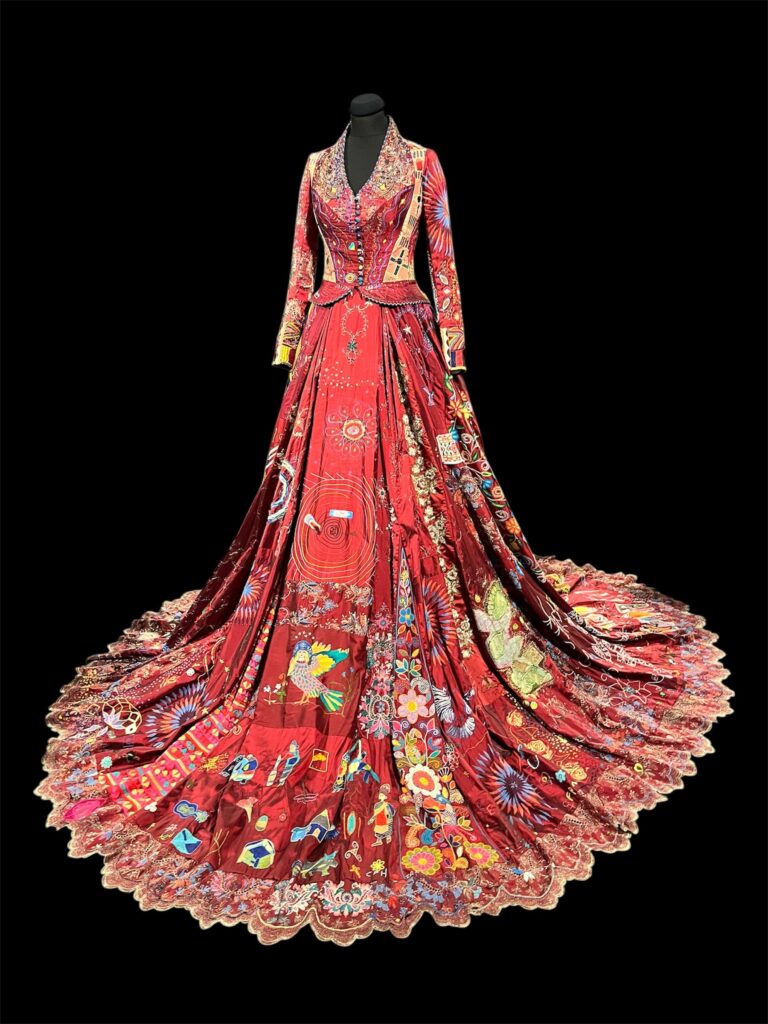
The Red Dress Project is a 14-year global, collaborative embroidery artwork conceived by British artist Kirstie Macleod in 2009. The dress became a platform for people from around the world to share their stories and identities through embroidery.
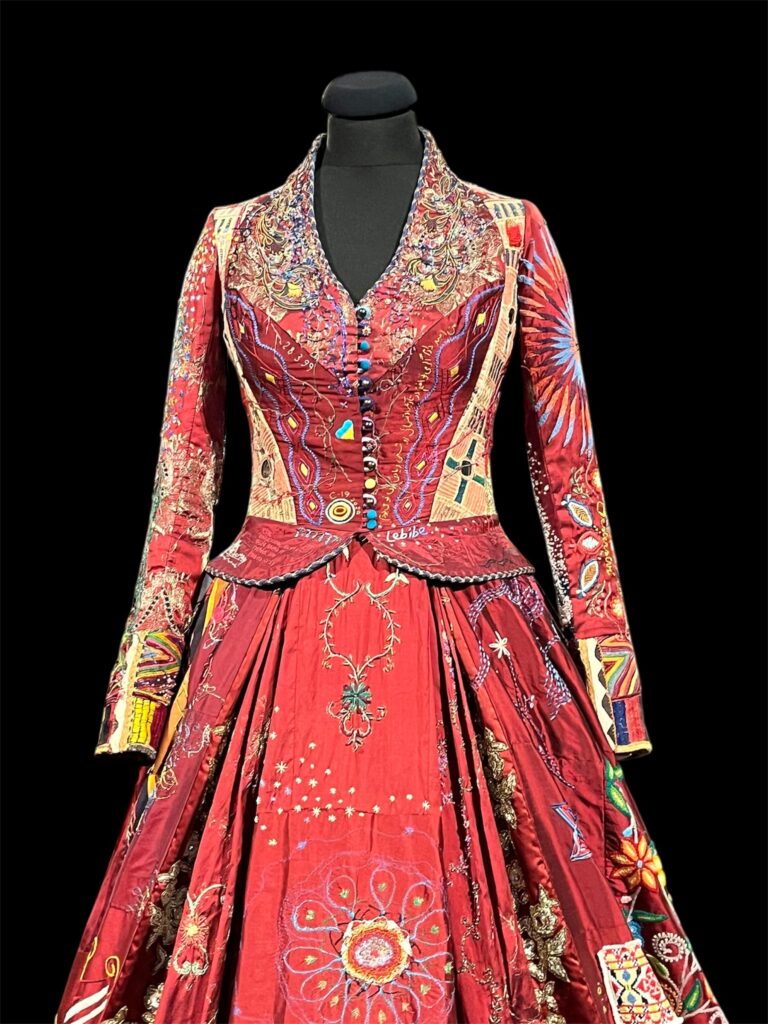
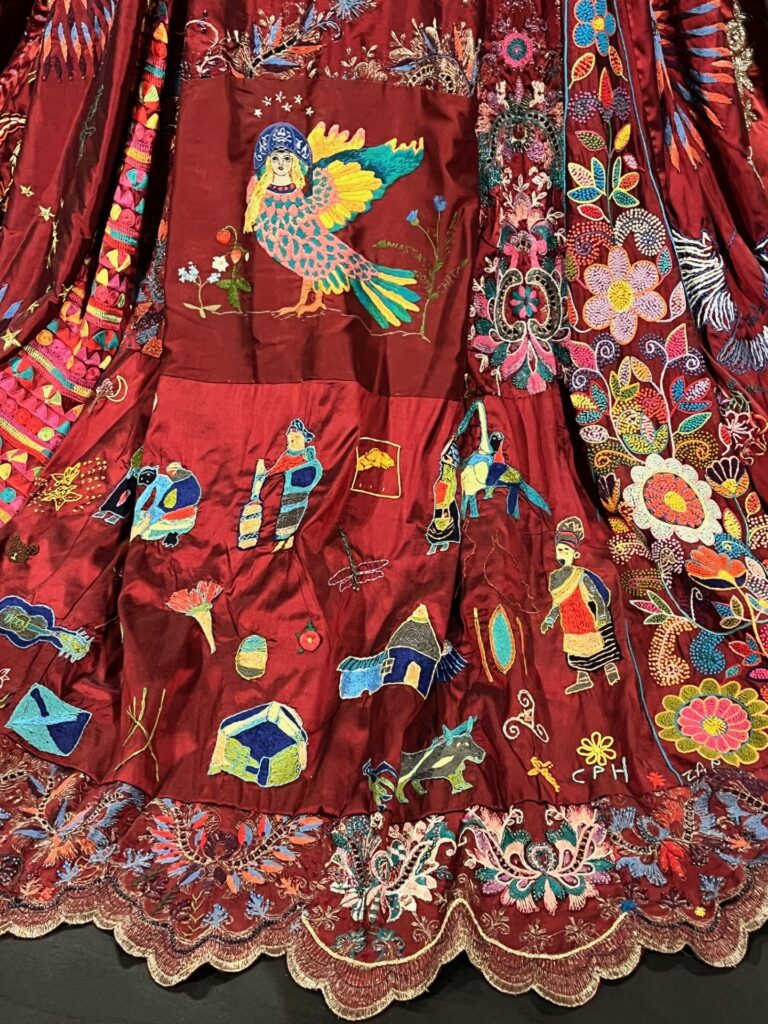
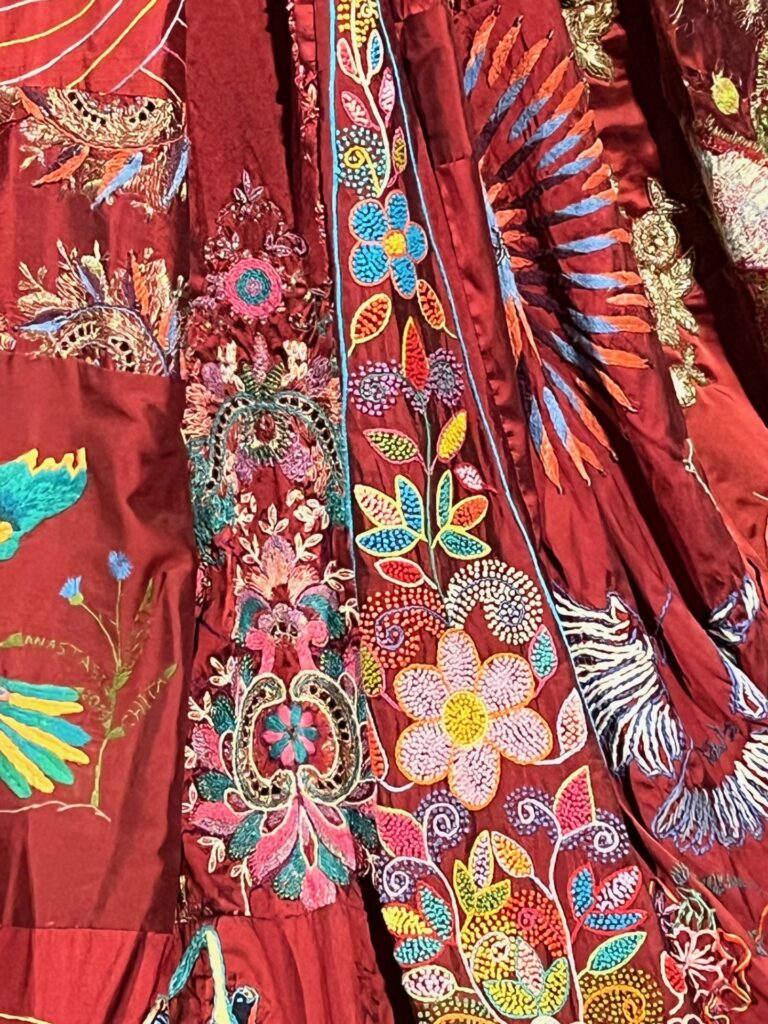
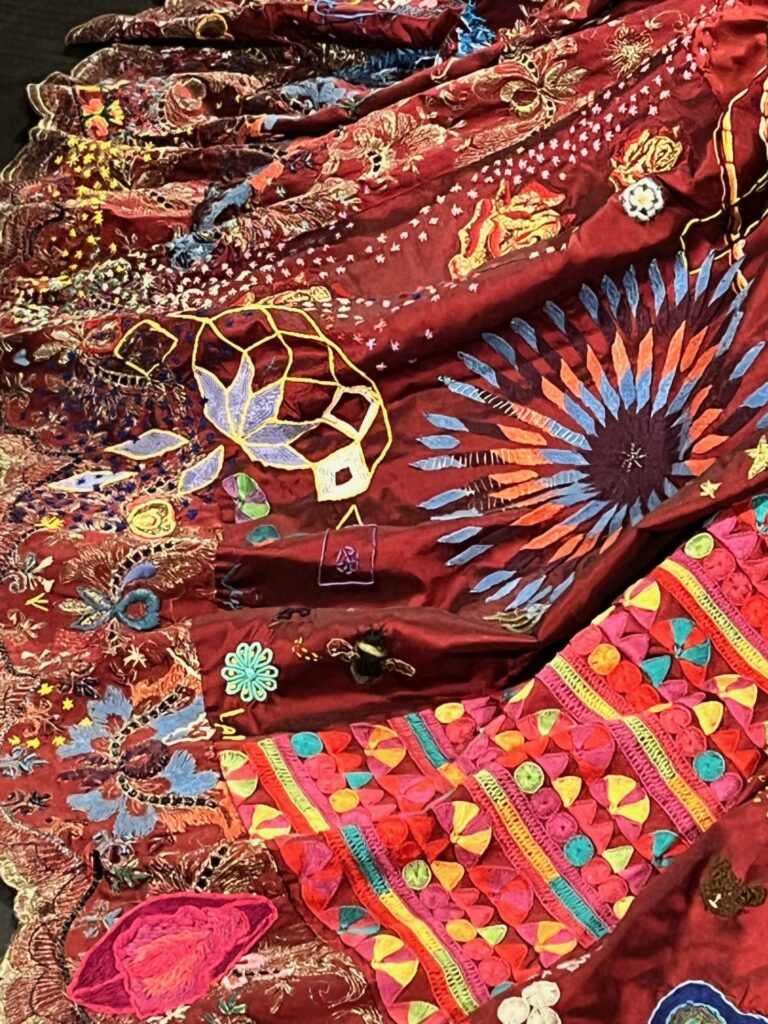
Over the period of its creation, the dress was embroidered on by hundreds of artisans – 380 makers across 51 countries, including women, girls, men, boys and non-binary artists. Each person stitched a piece that reflects their own voice, culture, experience and creativity.
Who Made It? The Artist Behind the Dress
The project was imagined and coordinated by Kirstie Macleod, a British textile artist and maker. Kirstie has worked with textiles for over two decades and envisioned the Red Dress as a way to connect individuals across borders and differences through a shared creative act.
Her own background – shaped by travel, exposure to diverse cultures, and a lifelong engagement with stitching – deeply informs the artwork’s ethos. Embroidery isn’t just technique here: it’s a form of expression, connection and healing.
Why a Red Dress?
Red is a complex, powerful colour – it speaks of visibility, presence and strength. Kirstie chose red because it cannot be ignored and because it carries associations with passion, identity and emotion.
The dress itself is made from rich burgundy silk dupion and is weighty not just in fabric, but in the collective stories stitched into its surface – an estimated 1–1.5 billion stitches that, together, create a garment that feels alive with personal histories.
Community, Collaboration, and Voice
At its heart, The Red Dress Project is about community and connection. It started as a way to explore identity across cultures, cultures and borders, but it evolved into something much bigger: a platform for often marginalised voices to be heard. Many of the artisans who contributed were living through hardship – from refugee displacement and extreme poverty to the aftermath of war and discrimination. The act of stitching became a way not only to contribute art, but to share a piece of life, resilience and hope.
From Concept to Global Journey
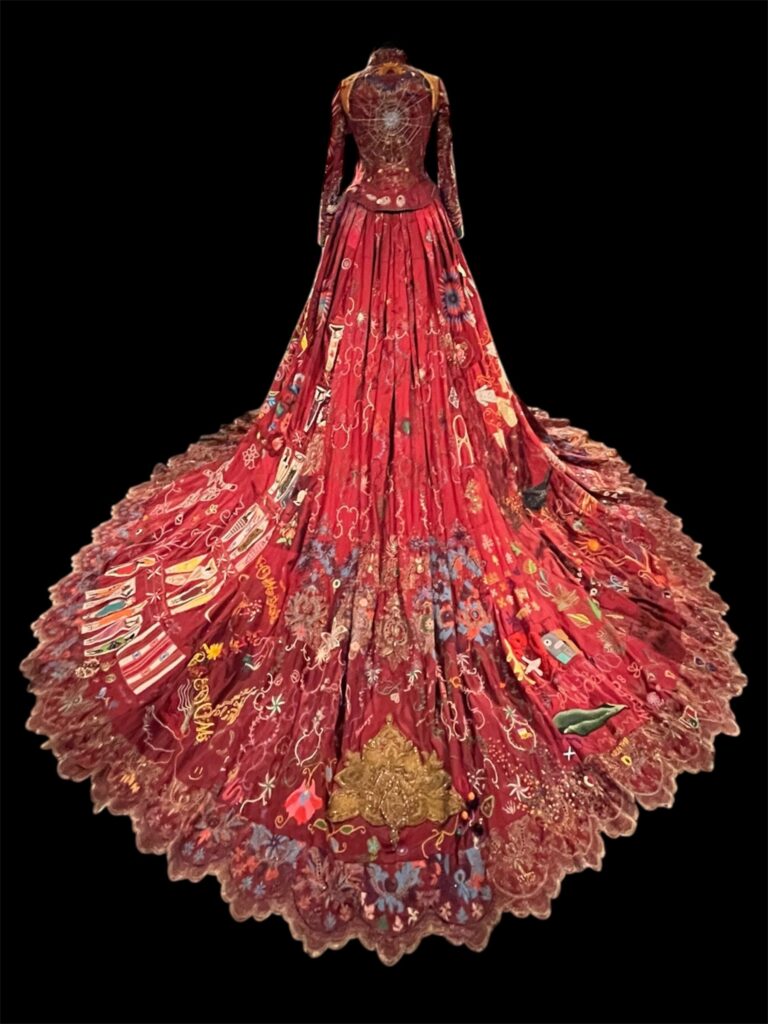
The Red Dress wasn’t created in one place – it travelled. Beginning with commissions and contributions across continents, the dress evolved panel by panel into the magnificent garment you see today. It has featured in galleries, museums and cultural institutions around the world, from Paris and London to Sarajevo, Pittsburgh and beyond.
In 2026, it was recognised by Guinness World Records as the largest collaborative embroidery project on Earth – a testament to the scale of its ambition and reach.
More Than a Dress
When you stand in front of it, you first see the detail – the motifs, the cultural references, the personal narratives stitched into silk and thread. But The Red Dress is far more than an artwork; it is a tangible symbol of shared humanity, reminding us that craft can be a language of connection, that creative collaboration can cross boundaries, and that every single stitch represents a voice, a life, and a story.
Why It Matters to Makers and Storytellers
For anyone who loves textiles, stitch, community and purpose-driven art, The Red Dress Project is a powerful reminder that craft is never just craft – it’s a means of expression, empowerment and connection.
Whether you’re inspired by the sheer scale of the collaboration, the stories behind the stitches, or the beauty of the work itself, this dress continues to resonate long after you’ve walked past it.