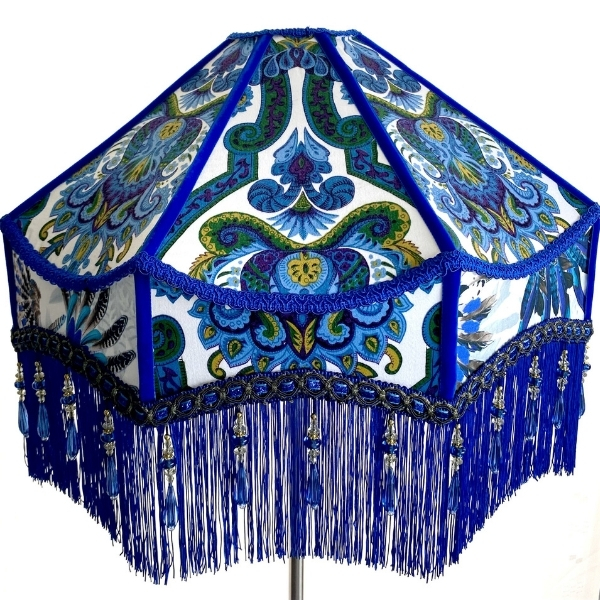
Vintage-style wire-frame lampshades are a perfect example of modern maximalist home décor. With their shaped panels, layered trims, fringing and decorative details, a modern take on this traditional style celebrates texture, colour and pattern rather than minimalism or clean lines. They’re also a wonderful project for repurposing beautiful fabrics, such as old curtains, upholstery remnants or unique textiles.
This guide walks through the basic process of turning a vintage curtain into a traditional, hand-sewn lampshade with a richly decorative, maximalist feel.
Choosing the Fabric and Frame
Vintage curtains, upholstery fabrics or medium-weight furnishing fabrics all work well. Prints with strong colours or bold motifs are ideal, especially if you’re aiming for that loud, eclectic maximalist look. You could also mount delicate fabrics over a studier base cloth, using layering as a design feature.
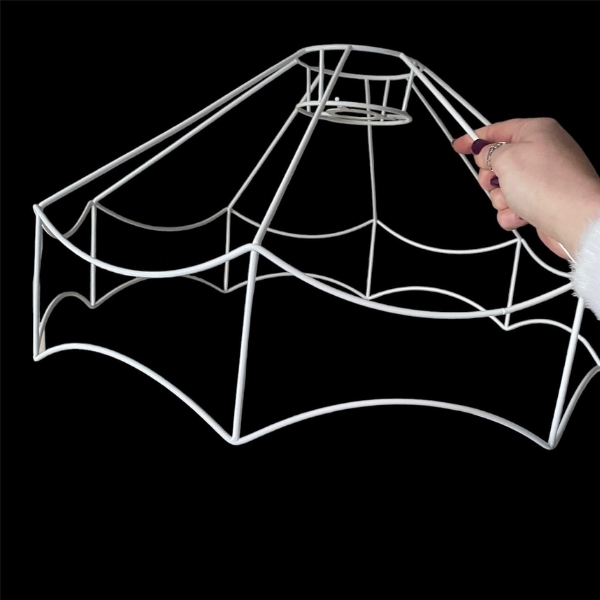
Choose a wire frame that suits the intended lamp. Make sure the shade fitting is compatible with your UK light pendant before purchasing. Larger frames, such as the 22-inch shade pictured here, work well on tall floor lamps and create a strong visual statement.
Making the Panel Patterns
This vintage-style frame uses two panel shapes:
- The main upper panels
- Smaller panels / sections around the lower edge
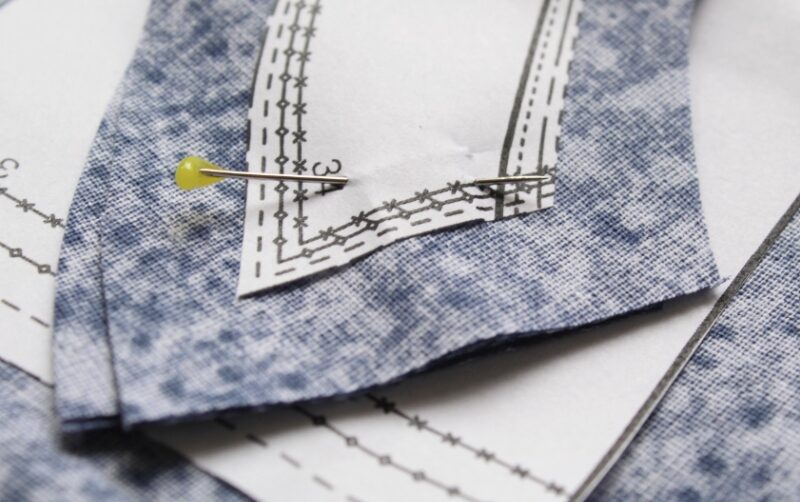
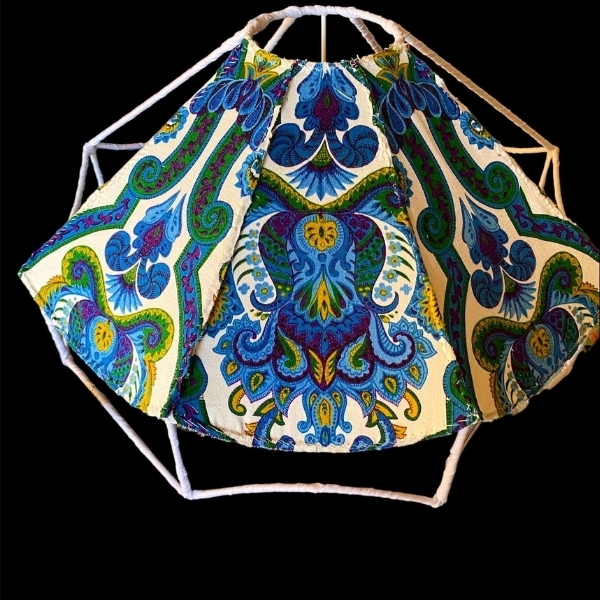
Measure each section of the frame and create simple paper templates for both panel types. Test the templates against the frame to check the fit before cutting into the fabric.
When placing the templates on the fabric, take time to consider the print placement. Because the panels repeat around the frame, the positioning of motifs can have a big impact on the finished look.
Complimentary prints or colours could also be introduced as a feature to create a layered, collected look that fits beautifully within a maximalist style.
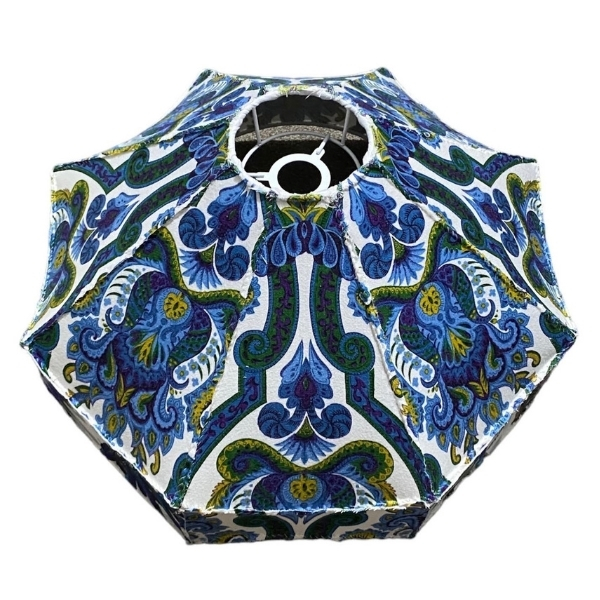
Measuring the Trims
Before assembling the shade, measure all the trims required. This includes:
- The top edge of the frame
- Panel seams
- The bottom edge
- Any decorative layers such as fringe or beading
Accurate measurements help avoid gaps or running out of trim before you finish.
Binding the Frame
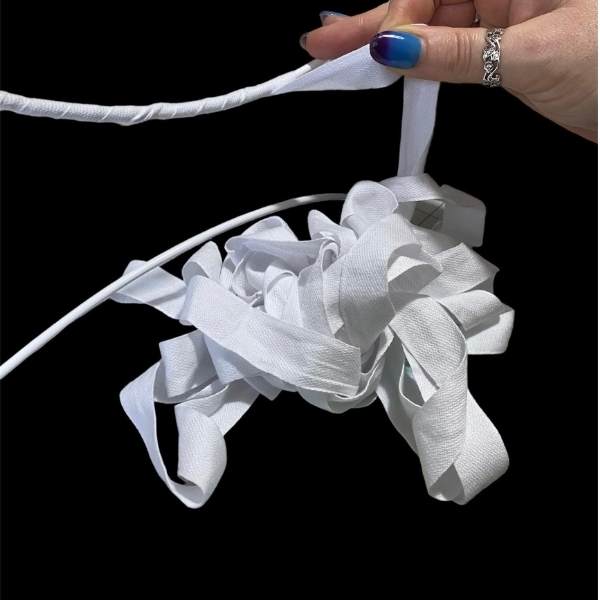
Before attaching any fabric, the wire frame must be wrapped in woven cotton tape. This creates a surface that can be stitched into when mounting the panels.
Wrap the tape around all parts of the frame and secure the ends with stitching. Glue can be used for extra stability, but be mindful as hardened glue can make sewing difficult.
Mounting the Fabric Panels
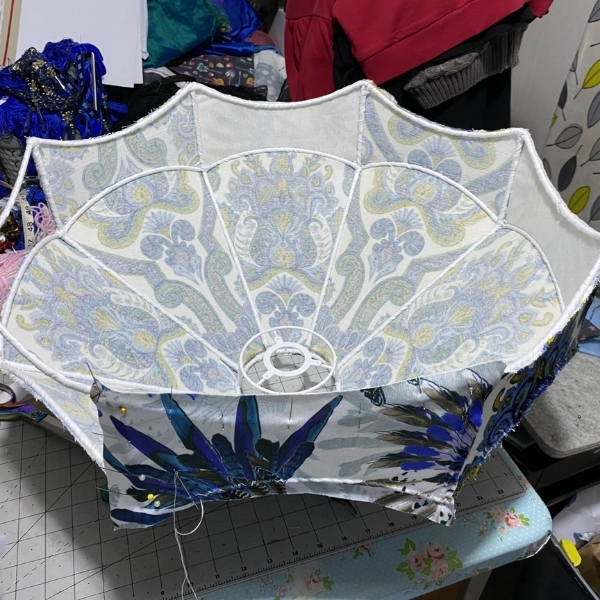
Mount each panel individually using pins, gently pulling the fabric taut as you go so the panel sits smooth and even before you start stitching. Hand sew around the edge of each panel, catching both the top fabric and the binding underneath to secure it to the frame.
A large, curved upholstery needle is ideal for this project, but it can be rather tough on the hands, so it’s best done in short, comfortable sessions – or just be sure to take a break when your hands tell you they need one!
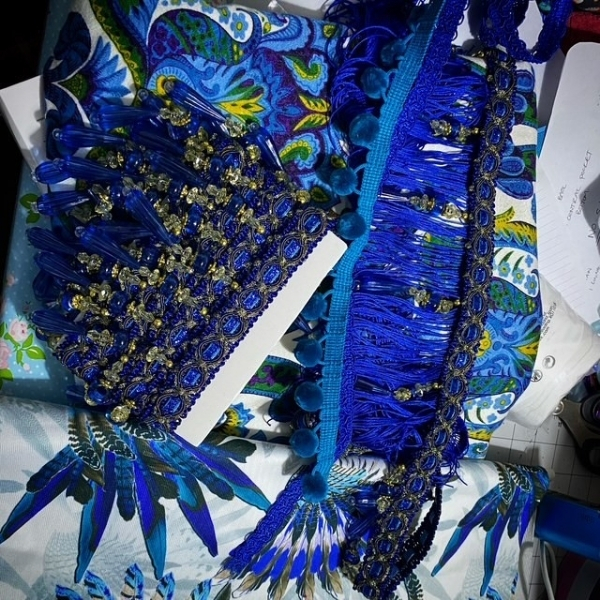
Adding the Decorative Trims
Once the panels are secure, the trims can be added in layers. These are usually stitched along all edges of the shade where the panels meet.
Typical finishing layers might include:
- A decorative braid or trim
- A layer of fringe
- A beaded trim
- A final edging along the bottom
Layering different trims is where the maximalist character really comes to life, adding depth, texture, movement and visual interest.
Optional Lining
Some vintage-style lampshades are lined, particularly if the underside will be visible. Lining adds a more polished finish and can soften the light. However, for shades where the underside is not visible – an nice tidy unlined interior can still be perfectly acceptable.
A Decorative, Maximalist Make
Making a traditional wire-frame lampshade is a slower, more tactile project than many machine-sewn makes. The process involves careful measuring, hand stitching and decorative detailing, but the result is a unique, characterful piece that celebrates colour, texture and individuality.
It’s an ideal project for anyone drawn to maximalist interiors, vintage textiles, or the idea of turning overlooked fabrics into something bold, beautiful and completely one of a kind.