

We’ve all seen them. A piece of furniture that has definitely seen better days. The fabric is faded, torn or dated, the cushions are looking decidedly worse for wear, and your first thought might quite reasonably be: that’s had its day.
But has it?
Sometimes, underneath the worn-out fabric and years of use, there’s a perfectly good piece of furniture just waiting for someone to give it another chance.
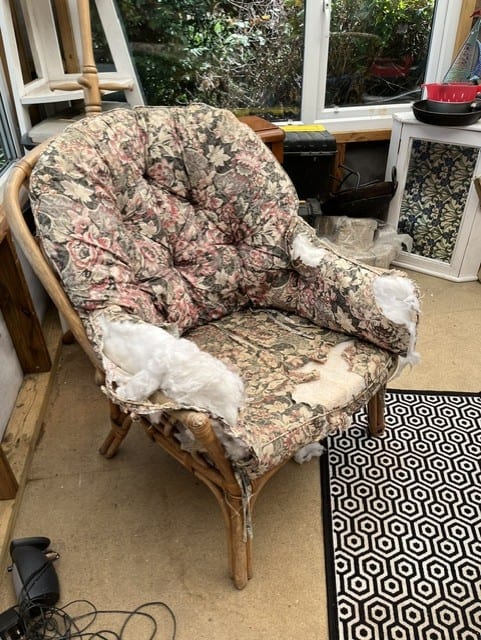
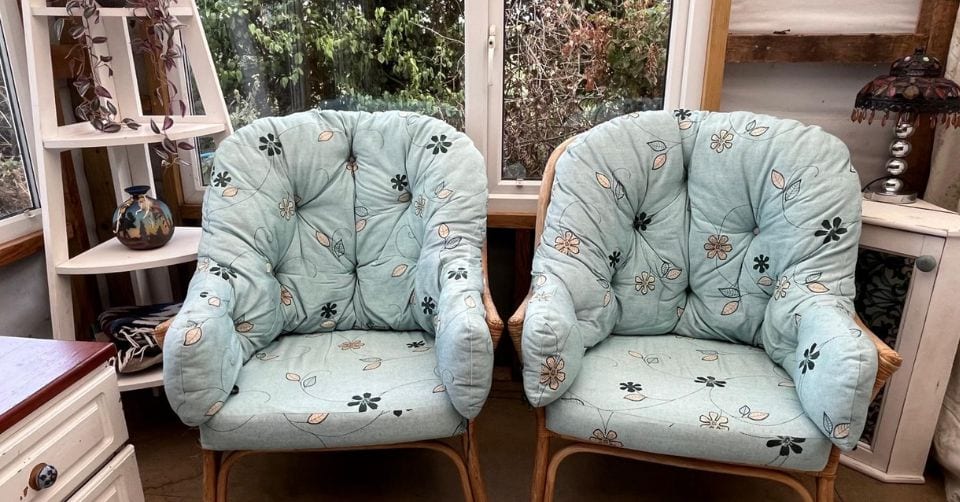
And that’s exactly what happened with this pair of wicker conservatory chairs.
Look past what you can see
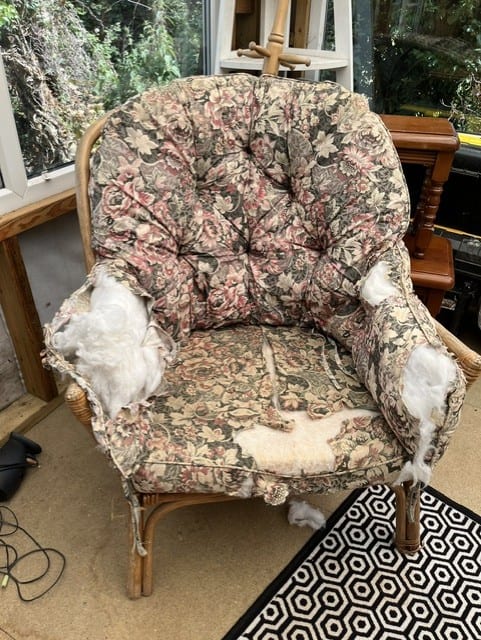
At first glance, these chairs weren't particularly promising. The upholstery had a distinctly late-90s floral feel, but more importantly, years of use and sunlight had taken their toll. The fabric was badly faded and perished in places, with tears and damage that meant simply repairing it wasn't really an option.
The chairs themselves, however, were another story.
The frames were still solid, sturdy and completely usable. There was nothing fundamentally wrong with them – it was the soft furnishings that had reached the end of their life. So rather than asking, 'Are these chairs too old?', the better question became: 'What can we reuse?'
As it turned out, quite a lot.
Starting with something old
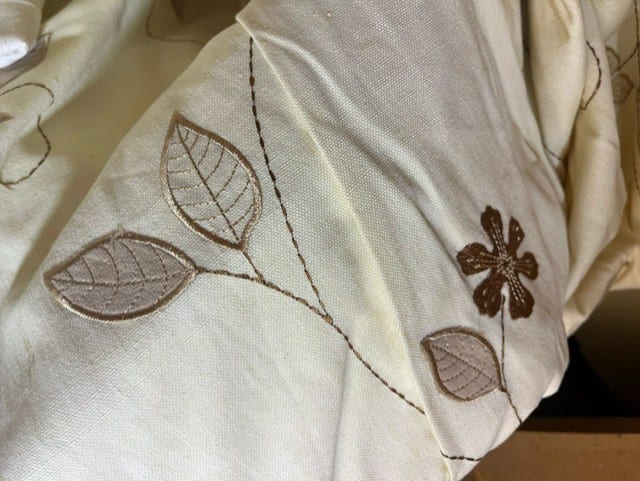
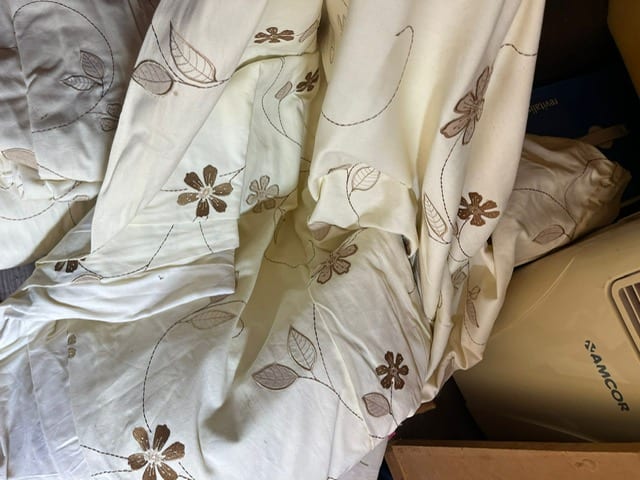
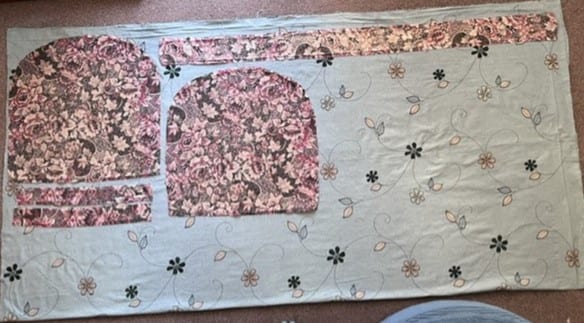
There was no need to rush out and buy metres of new upholstery fabric. Instead, the starting point was an old pair of large cream curtains with brown embroidered & applique detailing. They were no longer needed as curtains, but there was plenty of good fabric in them.
The colour wasn't quite right for their new surroundings, so into the dye they went! An easy to use Dylon fabric dye, just throw is all in the washing machine and hope for the best! The result was much better than expected and not patchy in the slightest.
The base fabric took on a lovely green colour while the embroidered areas responded differently to the dye, leaving a subtle contrast and texture across the fabric. What had started life as one thing had suddenly become something completely different – and far more interesting than a plain piece of newly bought fabric might have been.
That's one of the lovely things about repurposing textiles: you don't always know exactly what you're going to get. Sometimes the unexpected bits are what really make the finished project.
When you don't have a pattern, make one
Of course, having fabric was only part of the challenge. There was no pattern for the original cushions and no instructions to follow. The only templates available were the old, rather battered cushions themselves.
For the seat cushions, the most intact original cover was carefully unpicked and taken apart. Even though some sections were torn, the individual pieces gave enough information to work out the original construction and create pattern pieces from them.
The original zip was removed too – and, because it was still perfectly usable, kept. The new pieces were then cut from the dyed curtain fabric, sewn together and the original zip put straight back in. One new seat cover, without needing a new cushion pad or even a new zip. Then it was simply a case of doing it all again for chair number two.
The slightly trickier bit…
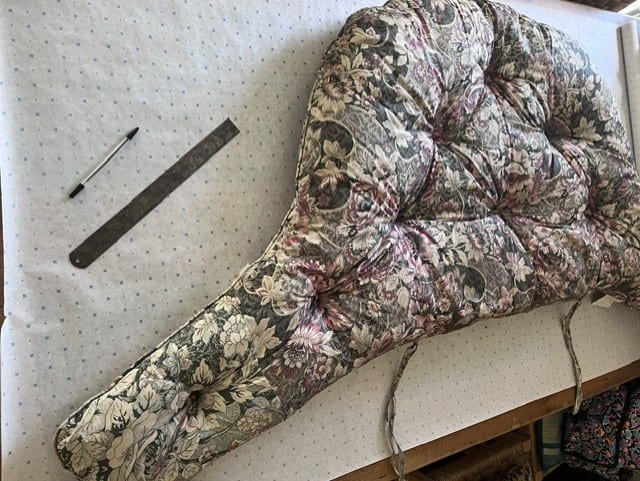
The buttoned back cushions were a different kind of challenge. Unlike the seat cushions, there wasn't a removable cover with an inner pad. The fabric itself formed the cushion, filled directly with wadding and finished with buttons pulled through the front and back. There wasn't really anything useful to unpick and copy.
So this part involved something every maker becomes familiar with sooner or later:
Making an educated guess.
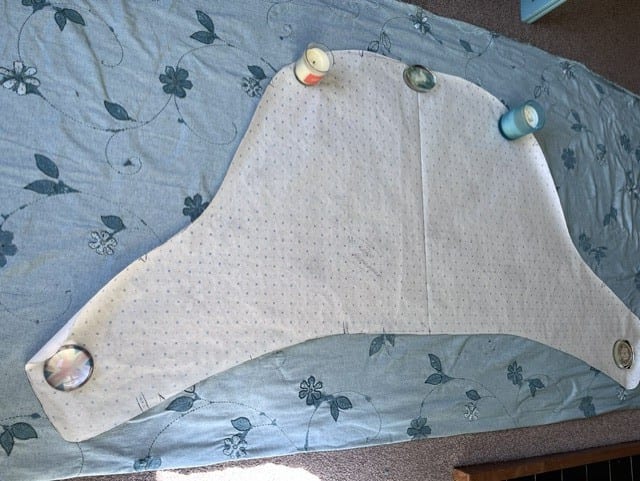
One of the original cushions was laid onto pattern paper and drawn around to establish the overall shape. The positions of the ties were marked using the original cushion as a guide, and a new pattern was created from there.
Was there a moment of wondering whether this was actually going to work? Absolutely. But sometimes you simply have to cut the fabric and find out.
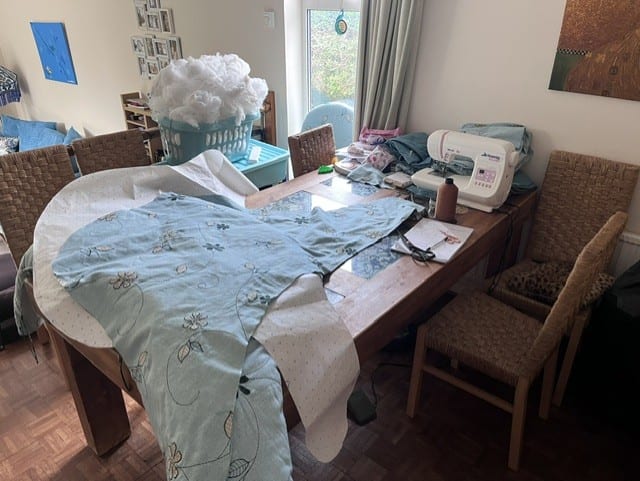
Even the stuffing got another chance
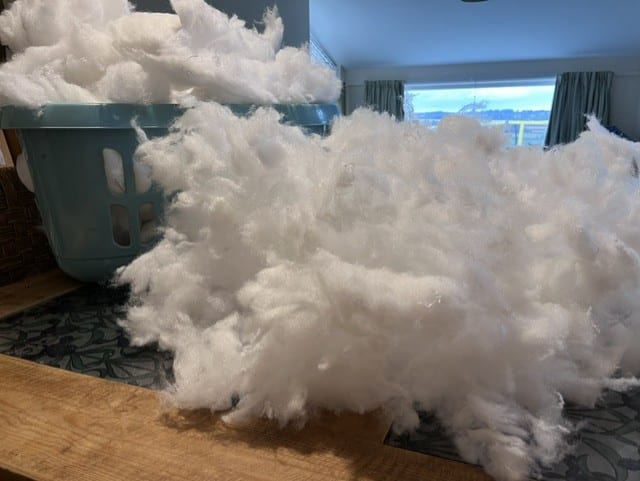
Once the old back cushion was opened, there was another decision to make. The wadding inside was old and clumped together – but it wasn't unusable.
Rather than throwing it away and replacing it, all of the filling was removed by hand, pulled apart, fluffed up and redistributed.
The new cushion covers were sewn, leaving an opening along the bottom, and the reclaimed wadding was gradually fed back inside. It took a little patience to make sure the filling was evenly distributed and the cushion had a good shape again, but once everything was in place, the opening could be sewn closed.
Old fabric gone. Old filling saved.
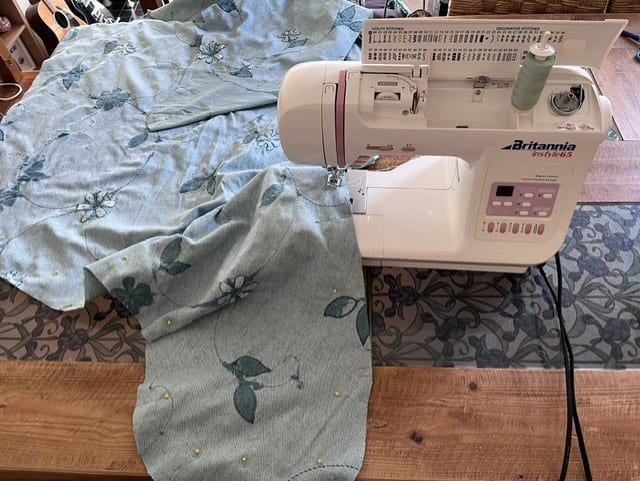
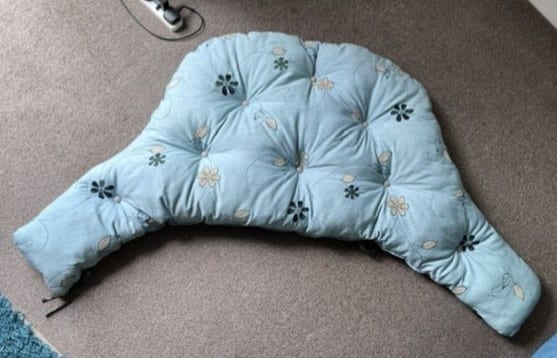
The only thing bought new
There was one part of the project where buying new felt like the sensible option: the buttons.
The original button-back design puts quite a lot of tension through those buttons, so although fabric-covered buttons could have been made at home, professionally made upholstery buttons offered the strength needed to hopefully keep the cushions looking good for years to come.
And that was it.
The chair frames were reused. The seat pads were reused. The wadding was reused. The zips were reused.
The new upholstery fabric was actually a pair of old curtains. Even the curtains were transformed rather than simply used as they were.
The only new components were the upholstery buttons.
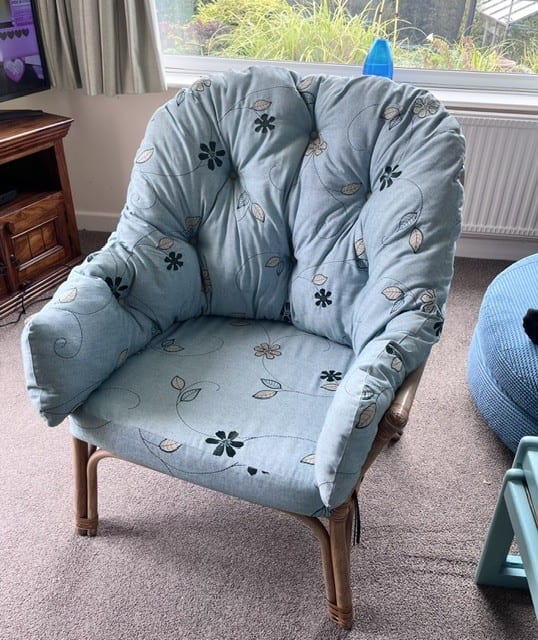
Perhaps it's not as difficult as it looks
The most surprising thing about a project like this isn't necessarily the transformation. It's discovering that you can actually do it. And when you don’t know how – you just figure it out.
Looking at a badly damaged piece of upholstered furniture can feel intimidating, particularly if you've never tackled anything similar before. Upholstery sounds like something you should know how to do before you begin.
But this wasn't about knowing exactly what to do from the outset. It was about looking at how something had originally been made, carefully taking it apart, figuring out what could be reused and working through one problem at a time.
Unpick it. Look at it. Make a pattern. Try it. Adjust if necessary. Move on to the next bit. That's making.
Before you throw it away, take another look
Not every old chair is worth saving, of course. Sometimes frames are damaged, materials have deteriorated beyond use or a project simply isn't practical. But appearance alone doesn't always tell you when something has reached the end of its useful life.
A dated fabric can be removed. A tired cushion can be recovered. A curtain can become upholstery fabric. A zip can be unpicked and used again. Even apparently useless stuffing might simply need pulling apart and fluffing back into shape.
When we start looking at the things around us as materials and components, rather than finished products destined either to be kept or thrown away, the possibilities become much bigger.
And you don't have to be an expert. You don't even have to know exactly how you're going to do it when you start. Sometimes you just need to be curious enough to take something apart and see what's underneath.
So… would you take on the challenge?
Perhaps there's an old chair in the garage. A stool that's been shoved in the spare room. A set of curtains you love the fabric of but no longer have a window for. Or a piece of furniture you've been meaning to take to the tip because it looks beyond saving. Before it goes, have another look.
What's actually broken? What could be repaired? What could be reused? And what could it become?
You might make mistakes. You might have to unpick something you've just sewn. You might change your plan halfway through. But you might also end up with something far better than you ever imagined – while keeping perfectly useful materials in circulation for a little longer.
And there’s something particularly satisfying about being able to look at the finished result and think... 'that nearly got thrown away!'
Loading latest suppliers...