

Leather has been used for centuries to make items that are both beautiful and long-lasting - from shoes and belts to bags and book covers. Today, leathercraft is enjoying a resurgence among makers and crafters who want to slow down, create with intention, and produce something that will last for years to come.
If you’ve ever admired a handmade leather wallet, a stitched keyring, or a personalised notebook cover and thought “I wish I could make that,” the good news is: you can. Small leather goods are a perfect starting point for beginners. They don’t require a huge investment in tools or materials, and they allow you to master fundamental techniques before moving on to larger projects.
"Leather stands as an enduring symbol of quality and circularity."
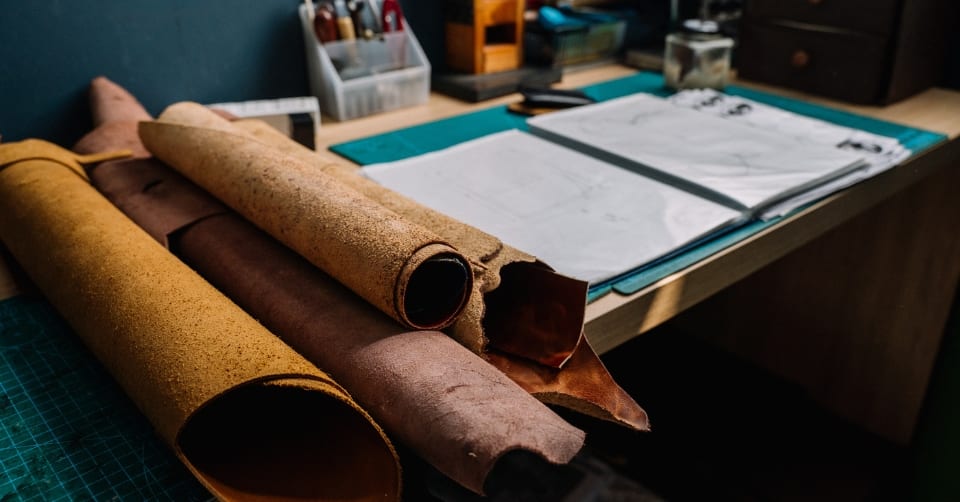
Why Start with Small Goods?
Working on a smaller scale means:
Less material, less risk – perfect if you’re learning and still building confidence.
Quick wins – you’ll see results faster and feel motivated to keep going.
Portable projects – great for home crafting without needing a full workshop.
Keychains, cardholders, bookmarks, and coin purses are all excellent beginner projects.
Essential Tools and Materials
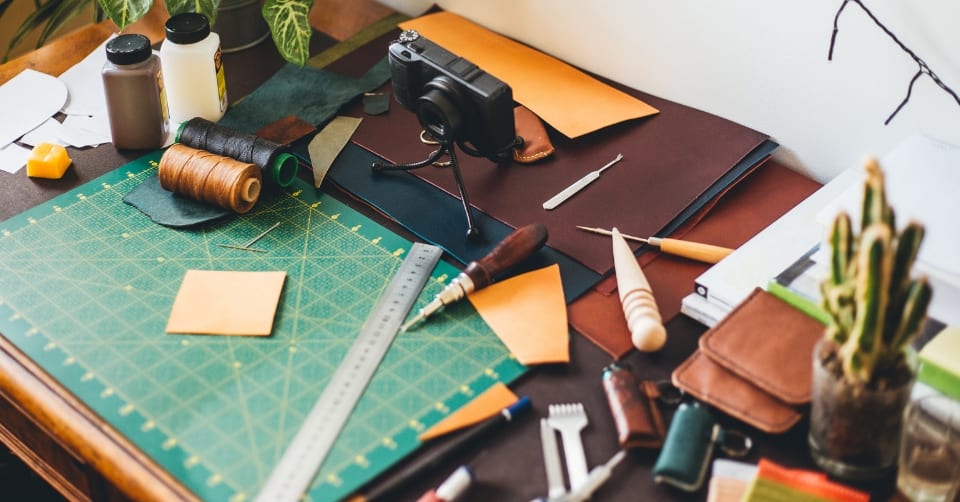
You don’t need a full leather workshop to get started. A few basics will take you a long way:
Cutting tool: A sharp craft knife or rotary cutter.
Cutting mat: Protects your work surface and your blade.
Awl or hole punch: For marking and making stitching holes.
Needles & thread: Waxed thread and blunt leather needles for hand stitching.
Edge tools: Sandpaper or a beveler to smooth and round off edges.
Leather: Start with vegetable-tanned (veg-tan) leather, which is versatile and beginner-friendly.
Techniques to Learn
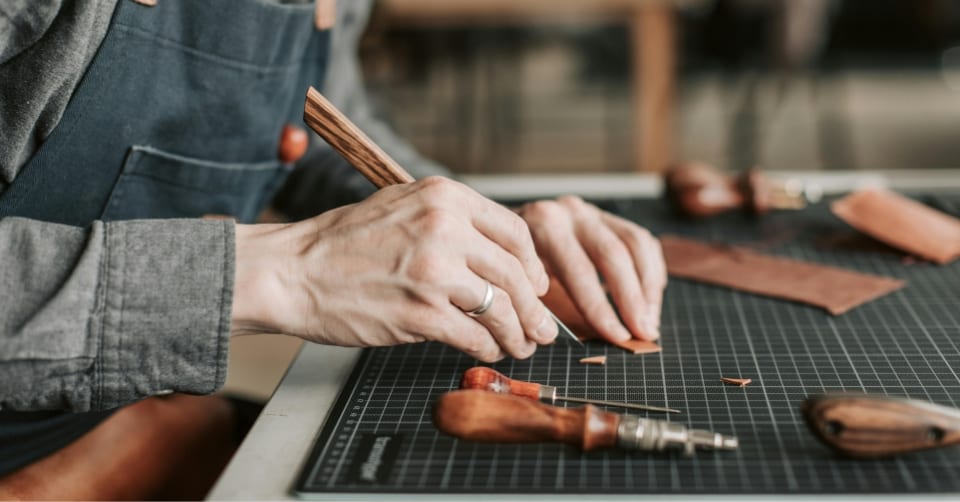
Cutting and marking – precise cuts are essential for clean lines.
Saddle stitching – a strong, traditional hand stitch that looks neat on both sides.
Edge finishing – burnishing edges with water or beeswax gives a professional look.
Simple dyeing and conditioning – protect and customise your leather with colour or oil.
Make It Yours
The beauty of leathercraft is the ability to create something unique. Add a monogram, experiment with contrasting thread, or mix leather with fabric for a mixture of textures. The smallest details can turn a simple keyring or purse into a cherished keepsake.
Why Leathercraft Belongs in the Crafty Community
At The Crafty Exchange, we celebrate mindful making and the joy of learning new skills. Leathercraft encourages patience, problem-solving, and creativity - all values we hold dear. Whether you’re making for yourself or crafting gifts for loved ones, leather projects carry a timeless quality that only improves with age.
So gather your tools, pick a small project, and dive in. Once you’ve made your first leather wallet or keyring, you’ll wonder why you didn’t start sooner!
Loading latest suppliers...